

Zugspitze: A Day Trip to Germany’s Highest Peak from Munich
While visiting Munich for Oktoberfest, I knew I needed to squeeze in a few mountain day trips. Our trip to Zugspitze (aka the top of Germany) exceeded all expectations!
The Zugspitze is Germany’s highest peak at 2,962 meters (9,718 feet), and on a clear day you can see over 400 surrounding peaks across four countries: Germany, Austria, Switzerland, and Italy. It’s an easy train ride from Munich; the whole round trip (train + mountain) fits inside a single day, and you’re back in the city in time for dinner.
Here’s exactly how to make it happen.
This site contains affiliate links to products. I may receive a commission for purchases made through these links at no extra cost to you. There are only products included that I truly love. I APPRECIATE your support!
Table of Contents
Quick Itinerary: Zugspitze in a Day (Day Trip from Munich)
Here’s a quick glimpse as to how to make this day trip happen. Keep reading below for all the details!
- 7:00–7:30am — Catch a regional train from Munich Hauptbahnhof to Garmisch-Partenkirchen
- ~9:00am — Arrive in Garmisch, grab a coffee/breakfast, walk to the Zugspitzbahn station
- 9:30am–12:30pm — Ride up (cogwheel train and cable car), explore the summit
- 12:30–2:30pm — Descend via Eibsee, walk along the lake, or rent a paddleboat
- ~3:00–4:00pm — Bus back to Garmisch station, train back to Munich
- Evening — Back in Munich in time for dinner and a well-earned beer
Getting to Zugspitze from Munich (Via Train)
When I first started looking into this day trip, this part really stressed me out. It seemed like a lot of steps to make it work. Turned out to be pretty simple (after we figured out how to navigate Munich’s main station), and was of course 100 percent worth it.
Here are my tips to make planning a tad bit easier for you!
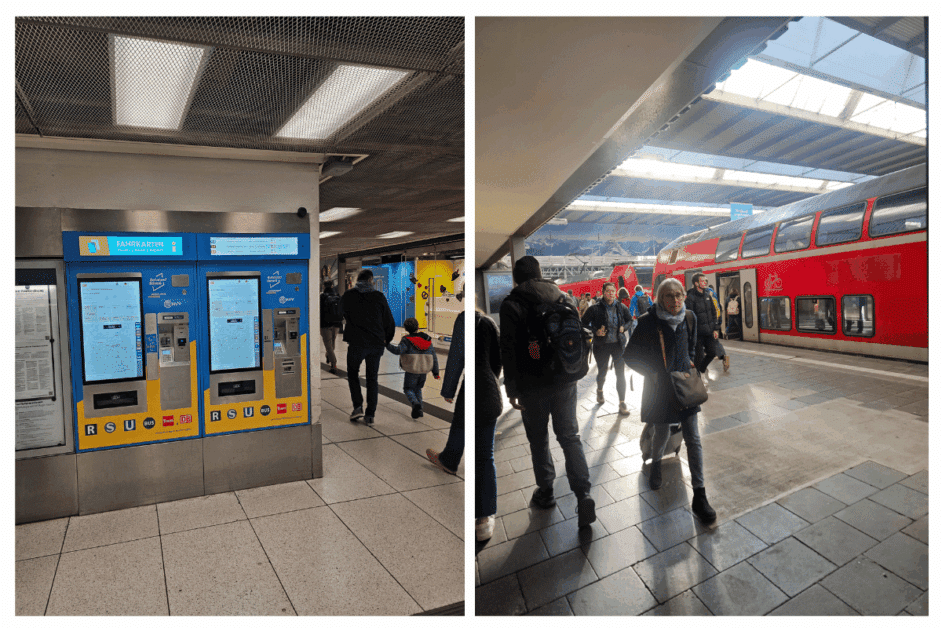
- Step 1: Munchen Hauptbahnhof to Garmisch-Partenkirchen (regional train)
- Step 2: Walk to Zugspitzbahn station
- Step 3: Take Cogwheel train to Eibsee Lake
- Step 4: Cable Car to Summit
Although we did have a rental car during our time in Germany, we left it at the hotel for this day trip as the train is pretty straightforward (and we were traveling with a group of friends who did not have a car).
Regional trains run roughly every hour from Munich’s main station (München Hauptbahnhof) directly to Garmisch-Partenkirchen, no transfers needed. The ride takes about 65–90 minutes and drops you right at the base of the mountain, steps from the Zugspitzbahn station where your ascent begins.
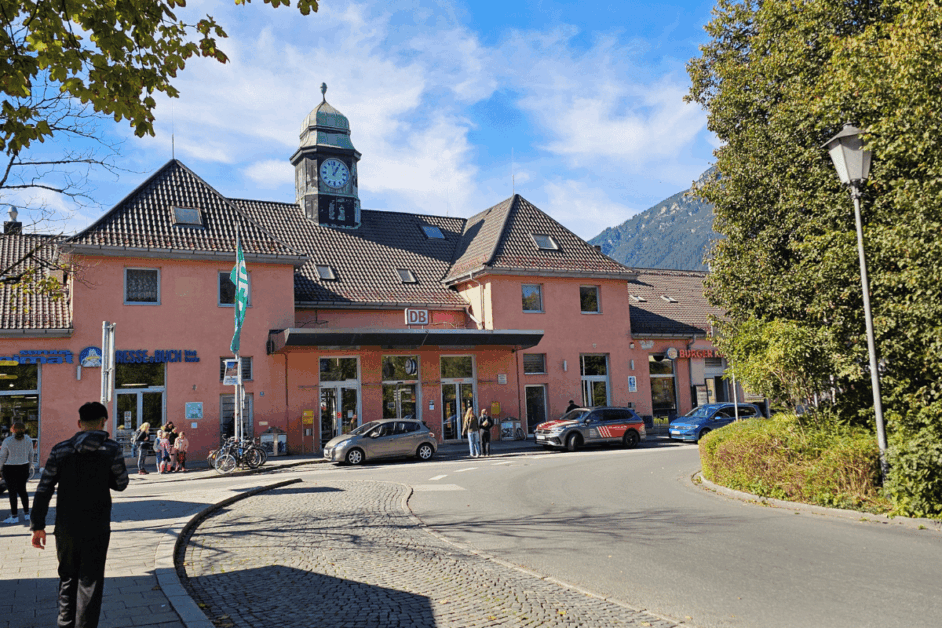
After arriving at Garmisch Partenkirchen, you’ll see signs that will lead you to Zugspitzbahn, where the adventure truly begins (you can also purchase tickets here if you haven’t already). It’s recommended to purchase in advance, though, as they do sometimes sell out.
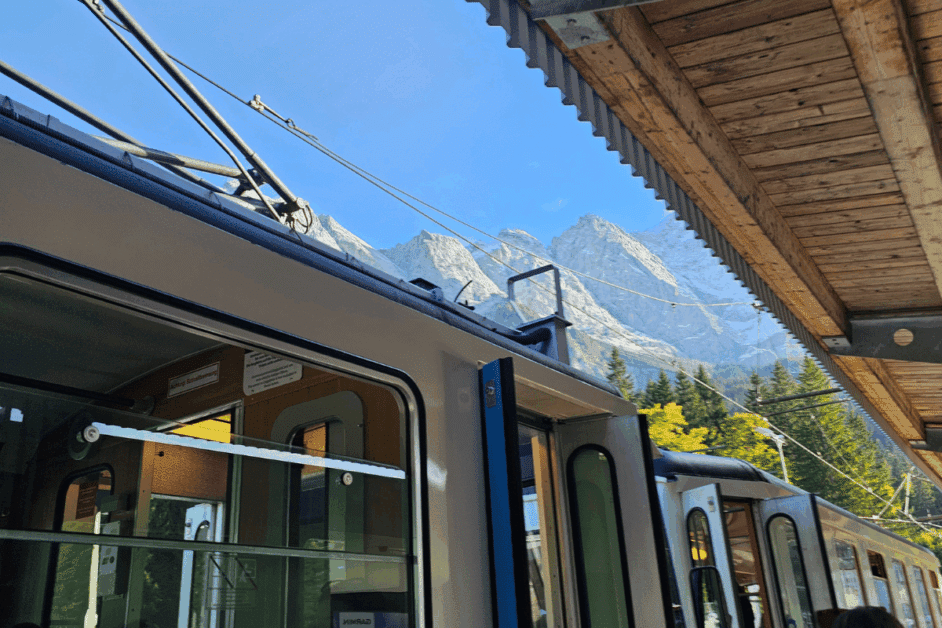
Then, you’ll hop on a cogwheel train (Bayerische Zugspitzbahn) which will take you to Eibsee Lake. From here, you’ll be able to walk to the cable car for the final stretch of the journey.
Pro tip! Be sure to spend time at Eibsee Lake either before or after your time at the summit.
Getting to Zugspitze (Via Car)
If you prefer to drive, here’s how to make it happen!
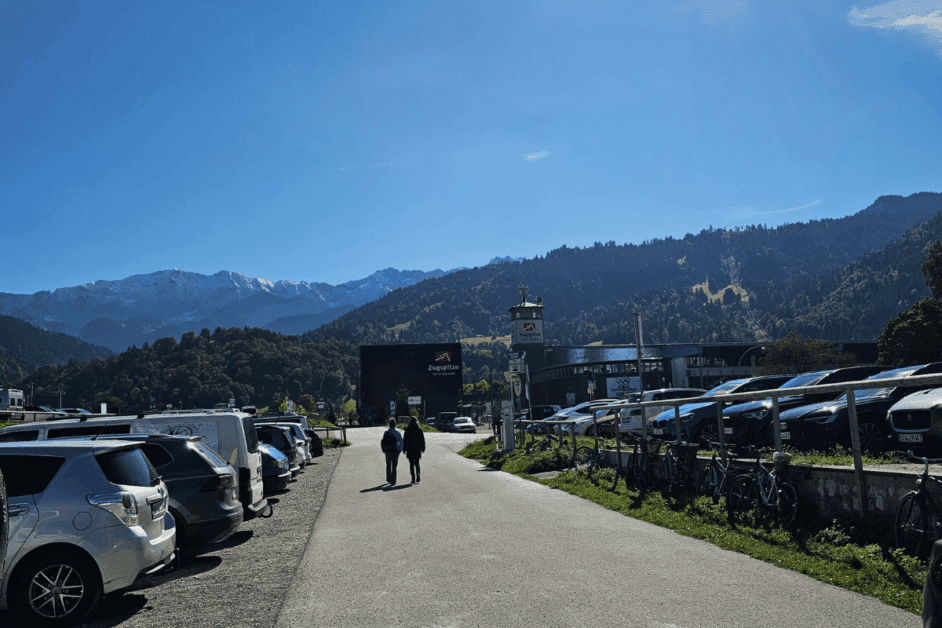
Take the A95 motorway south out of Munich, which becomes the B2 near Eschenlohe before carrying you the rest of the way into Garmisch-Partenkirchen — about 90 km and roughly 90 minutes with no traffic.
It’s a genuinely pretty drive as the autobahn gives way to the foothills. The trade-off is that you’ll want to decide upfront whether you’re parking at the Garmisch station (for the cogwheel train) or at Eibsee (for the cable car), since they’re not next to each other, and Eibsee’s lot fills up fast on clear summer days — aim to arrive before 8:30 am if that’s your plan.
It’s a fine option if you’re already road-tripping through Bavaria, but if you’re coming straight from Munich for the day, the train is one less thing to think about.
Getting to Zugspitze (via Tour)
If you’d rather not plan a single detail of it, a guided tour handles the whole thing for you. Several operators run day tours straight out of central Munich (Karlsplatz/Stachus is the usual meeting point) around 10am, and they run about €135–165 per person for a roughly 8-hour day that includes round-trip coach transport, both the cogwheel train and cable car up, and a guide narrating the whole way.
It’s not the most budget-friendly option, but it’s genuinely the lowest-effort version of this trip: no ticket-booking, no train timetables, no figuring out which cable car to take.
That trade is worth it if you’ve only got the one day in Munich and would rather not spend any of your limited planning time on logistics. Just double-check the tour’s cancellation policy, since the whole day hinges on clear weather at the summit.
Check out guided tours on GetYourGuide and Viator!
Tickets to Zugspitze
It is HIGHLY recommended that you buy your tickets directly through zugspitze.de rather than showing up and hoping for the best — you can select your exact route and a morning time slot, and it’s worth doing a day or two ahead for any clear-weather weekend, because the physical ticket counters build a real line by mid-morning.
We did take the risk and bought ours at the counter. We didn’t have any issues with it, and there was no line, BUT I obviously can’t guarantee you’ll have the same experience.
Pricing depends on which route you piece together: the full “Zugspitze Round Trip” (cogwheel train up, Gletscherbahn, and Eibsee cable car, like I described above) runs about €78 per adult for summer 2026.
If you’re driving and can get a parking spot at Eibsee, you can skip the cogwheel train and just take the Eibsee cable car both up and down; that alone runs closer to €47. Either way, hang onto the ticket; you’ll need it again for the descent, and it also gets you into the exhibits at the summit.
What to Do at the Summit
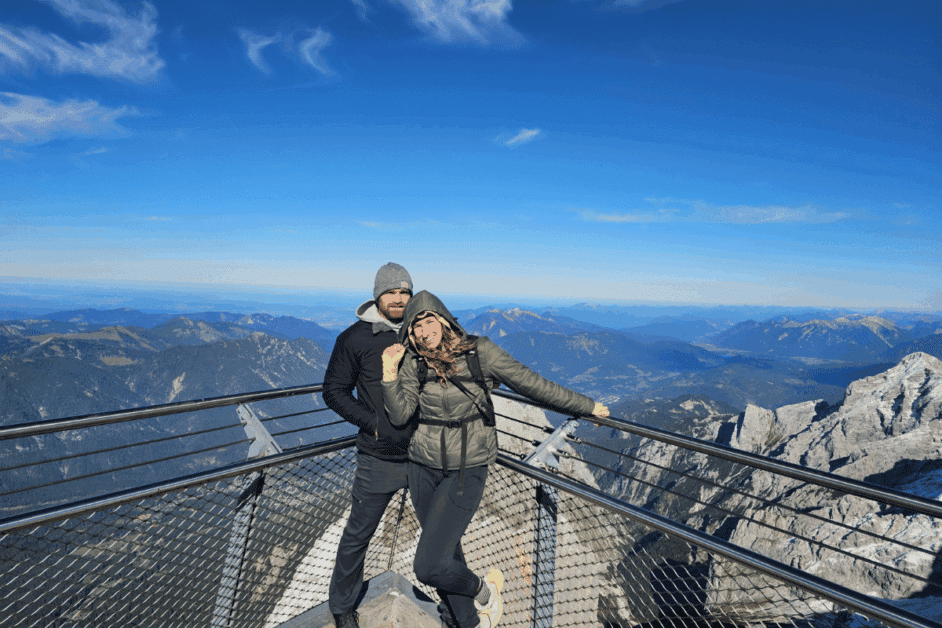
Once you make it to the top, take all the time to truly soak in the view. It’s amazing.
The summit has glass-walled viewing platforms on both the German and Austrian sides, and on a clear day the visibility genuinely does stretch across four countries.
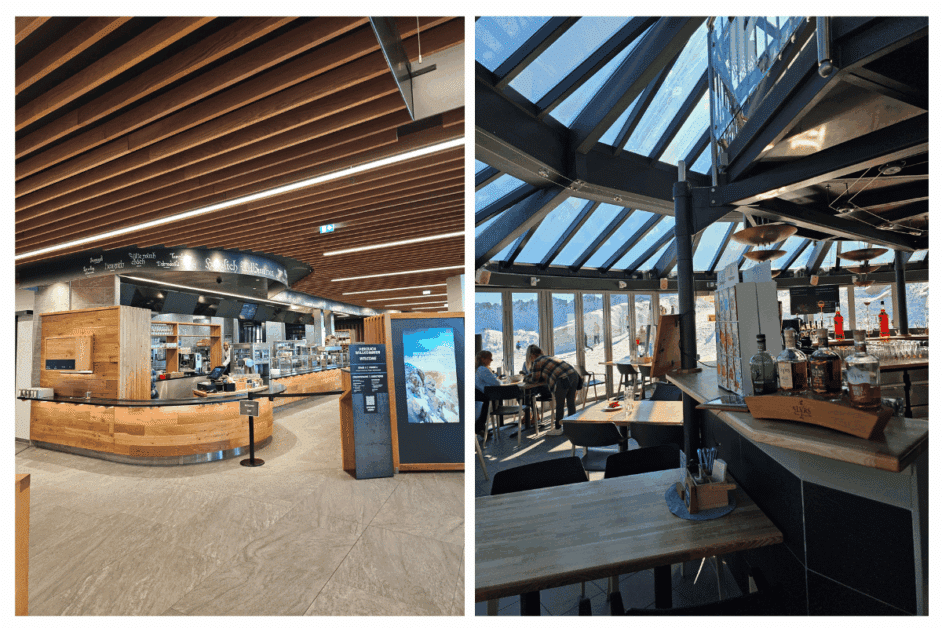
There’s also the highest church in Germany up here (the tiny Maria Heimsuchung chapel), a small exhibit on the cogwheel railway’s history, and Panorama 2962, a restaurant where you can eat lunch at nearly 3,000 meters like it’s completely normal.
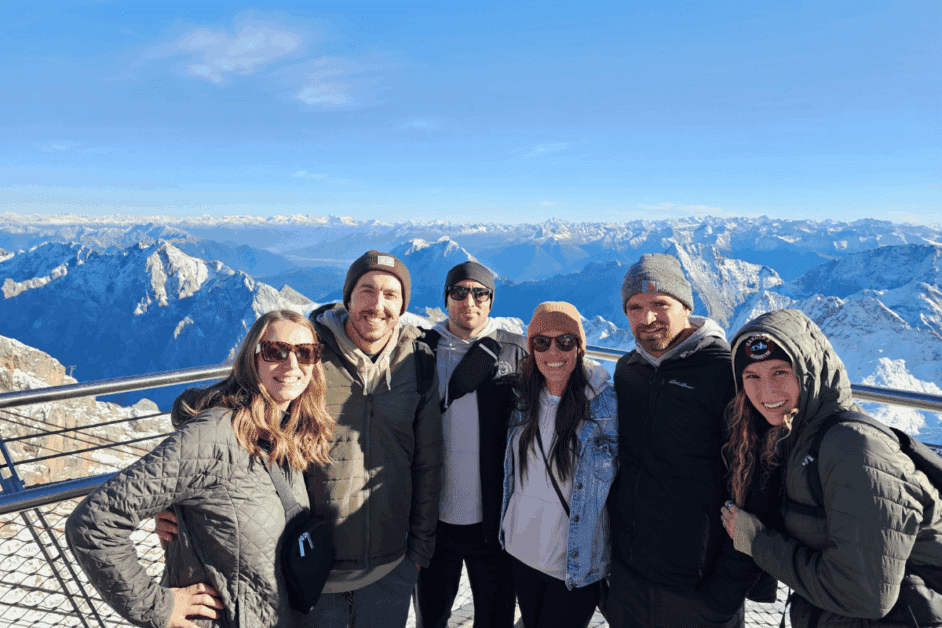
Once at the top, you can even hop on another cable car ride (included in your ticket), that will take you to the Zugspitzplatt glacier plateau. Here you’ll find another bar and free toboggans to try sledding down a hill!
You’ll also see people climbing to reach the actual highest point in Germany (pictured below), however, I wouldn’t recommend doing this without the proper gear and experience. It was fun to watch though.
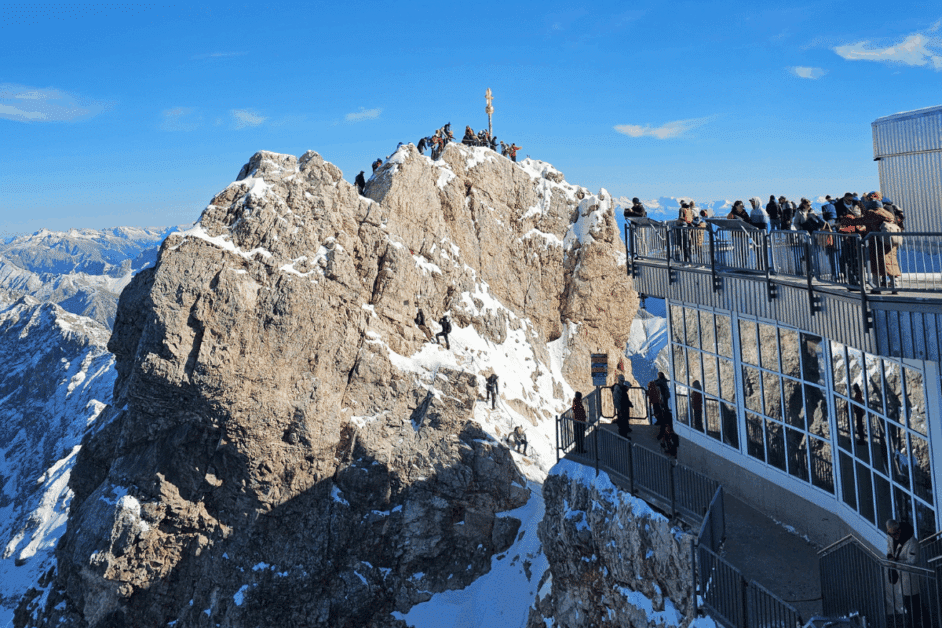
One important note: it is cold up here, even in summer. The summit runs 20–25°C colder than the valley below, so bring a real windproof layer, not just a light jacket you’re hoping will be enough.
The Eibsee Stop
Don’t skip Eibsee on your way down (or up); it’s an easy addition, and it might end up being your favorite part.
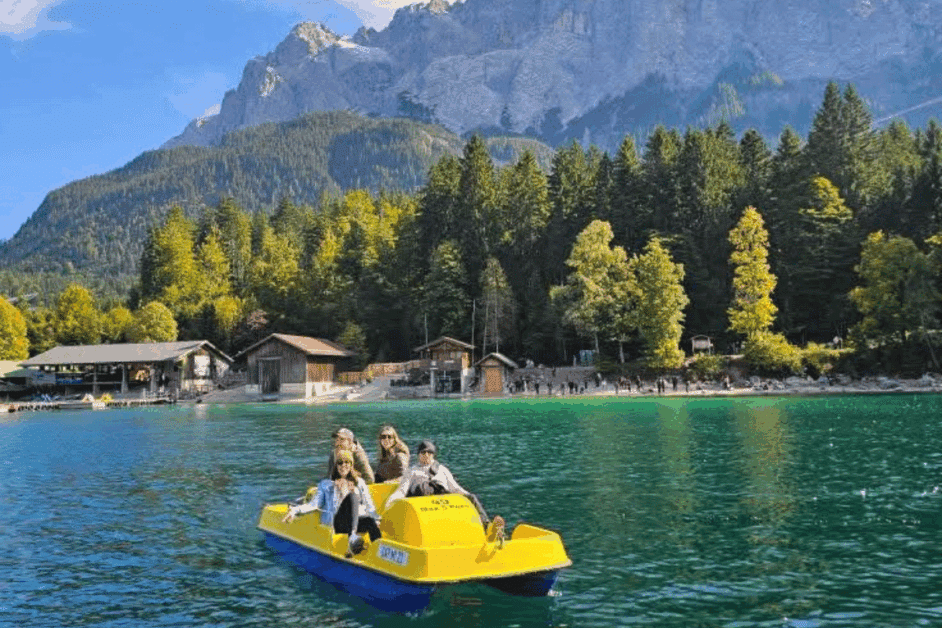
This is a strikingly turquoise alpine lake sitting right at the base of the mountain, and you can either just admire it from the cable car station or take a stroll along part of the shoreline (a full loop is about two hours, but even twenty minutes is worth it).
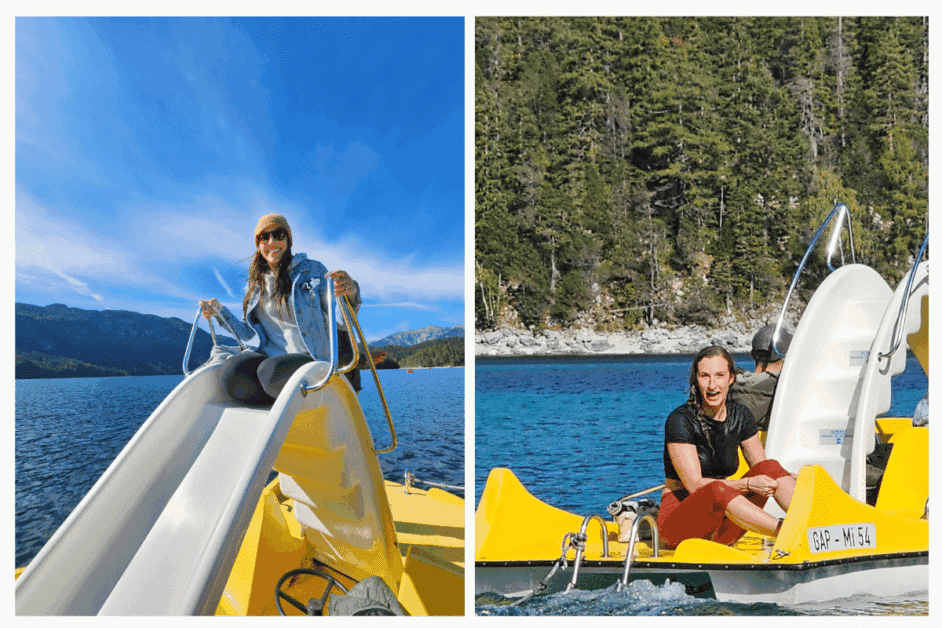
We rented the paddle boats for a super affordable price (onsite), and it was so much fun to experience it from the water. (and I, of course, couldn’t resist a polar plunge down the slide…I had extra clothes packed).
Practical Tips Before You Go
- Chase the weather, not the calendar. A clear day in shoulder season beats a cloudy day in July every time — check the summit webcam the morning of and be ready to adjust.
- Go early. Morning visibility is almost always better than afternoon, since clouds tend to build up over the peaks as the day warms.
- Book your mountain ticket online in advance, especially for summer weekends — it locks in a time slot and gets you past the counter line entirely.
- Layer up. Valley weather and summit weather are basically two different climates.
- Budget the full day. Between trains, the ascent, and time to actually enjoy the summit and Eibsee, this is a full day out — not a quick detour. That’s exactly why it’s worth using a whole day of PTO on.
FAQ’s: Visiting Zugspitze as a Day Trip from Munich
- Is Zugspitze doable as a day trip from Munich? Yes — comfortably. Between the train, the mountain, and Eibsee, plan on leaving Munich by 7–7:30am and you’ll be back well before dinner.
- How much does it cost total, roughly? Figure around €34 for the Bayern-Ticket (round-trip train + buses) plus about €78 for the combined mountain round-trip ticket — so roughly €110–115 per person for the full day, not counting food.
- Do I need to be an experienced hiker? Not at all. You can reach the summit entirely by train and cable car without hiking a step, which is exactly why this trip is so accessible.
- What’s the best time of year to go? Clear skies matter more than the season. Summer gives you the longest daylight window and access to the Eibsee walk without snow, but a crisp, clear day in fall or spring can offer even better visibility.
- Do I need my passport? You don’t need it to enter, but bring an ID just in case — you can technically step across into Austria at the summit.
If a single day of PTO can get you to the top of Germany and back to a Munich beer garden by dark, that’s a pretty good use of it. Save this one for your next Munich trip — future you will thank present you for planning ahead!
Looking for more Germany planning guides?! Here are some of my favs!


Comments Off on Zugspitze: A Day Trip to Germany’s Highest Peak from Munich